


Wondering what to do with eggplant? Give Pasta alla Norma a try.

If you shop at your local farmers’ market, you will find eggplants are in season and come in several different varieties. The most common type of eggplant found in supermarkets is the deep purple Black Beauty, also called the American or globe eggplant. The Black Beauty is also sold at farmers’ markets as well as some unusual varieties you may not have seen before.
For example, the Italian eggplant is similar in appearance to the Black Beauty, but it is smaller, and its flesh is more tender. The Chinese eggplant has a long, narrow body with a light purple skin and white flesh. Very similar in appearance to the Chinese eggplant, the Japanese eggplant also has a long, slender body but its flesh is deep purple. My all-time favorite is the Fairy Tale eggplant, which has purple and white striped skin and sweet, tender flesh. The Graffiti eggplant is distinguished by blotchy purple and white stripes, while White eggplants have a white skin, but inside they are similar to the American eggplant. Most white eggplants are grown from heirloom seeds, which means the seeds are at least 50 years old.
Wondering what to do with eggplant? Pasta alla Norma is a classic Sicilian dish that originated in the city of Catania. Made with tubular pasta, tender eggplant, and a garlicy tomato sauce, it is traditionally served with ricotta salata. Also originating in Sicily, ricotta salata is made from soft ricotta cheese. To make it, cheesemakers start with ricotta cheese. They press out the moisture, heavily salt the curds, and age the results for 30 to 90 days. In Italian, salata means “salted.” A semi-firm cheese, it holds its shape when sliced but crumbles easily like feta.
If you have some eggplant, give Pasta alla Norma a try. It is named after the famous 19th century opera, Norma. Legend has it that a Sicilian writer and journalist, Vino Martoglio, tasted the eggplant and tomato pasta and shouted, "Chista è 'na vera Norma!" meaning, “This is a real Norma!” or a supreme masterpiece.
Pasta alla Norma
Makes 4 Servings
I couldn’t find ricotta salata in my neck of the woods, so I substituted with Dodoni® Authentic Greek Feta Cheese (PDO) in Brine. It comes in a brick and is packaged in brine. Like ricotta salata, it holds its shape when sliced but crumbles easily. If you are able to find ricotta salata, I’d love to know if you like it.
7 tablespoons extra virgin olive oil, divided
1 pound eggplant, cut into 1-inch cubes
Salt to taste
1 medium yellow onion, chopped
1 heaping teaspoon dried oregano leaves
¼ teaspoon crushed red pepper flakes, or to taste
3 teaspoons minced garlic
1 can (28-ounces) crushed tomatoes or your favorite marinara sauce
½ teaspoon salt
½ teaspoon large grind black pepper
1 pound rigatoni
1 cup Dodoni® Authentic Greek Feta Cheese (POD) in Brine, crumbled
Basil for garnishing
In a large skillet, place 2 tablespoons olive oil over a medium heat. Add eggplant in a single layer, working in batches so as to not overcrowd. Sauté, stirring frequently, until eggplant is crispy, golden, and soft inside, about 6 to 8 minutes. Transfer to a plate lined with paper towels and season to taste with salt. Repeat until remaining eggplant is cooked, adding 2 more tablespoons of olive oil with each additional batch of eggplant. One pound of eggplant should yield three batches.
To the same skillet, add 1 tablespoon olive oil and onion. Sauté until onion is soft, about 5 minutes. Add oregano and red pepper flakes and cook 1 minute. Add garlic and cook 1 more minute until garlic is fragrant. Add crushed tomatoes, salt, and pepper, and stir to combine. Simmer for at least 10 minutes or until rigatoni is cooked.
In a large kettle, place 4 to 6 quarts of salted water and bring to a boil over a high heat. Add pasta and cook according to package directions until al dente. Reserve ½ cup pasta water.
Drain.
Return the drained pasta to the kettle. Add the crushed tomato sauce, reserved pasta water, and reserved eggplant and stir to combine. Cover and simmer for about 5 minutes, or until eggplant is warmed.
Serve warm with crumbled feta cheese. Garnish with slivered basil.
Tips on selecting eggplant: Eggplants should be firm and hard and feel heavy for their size. Choose eggplants with a smooth, glossy, skin with no signs of green. Pass up soft or spotted eggplants or ones that have wrinkly skin. Shriveling is a sign of aging. The stem end should be green and free of mold or mushiness. Eggplants become bitter with age.
Tips on storing eggplant: Eggplants keep about 4 days in the refrigerator.
Carol Ann

Carol Ann Kates is the award-winning author of cookbook, Secret Recipes from the Corner Market, and international Amazon best-selling and award-winning author of Grocery Shopping Secrets. She’s an expert in how to shop, select, and store produce for maximizing home cooking outcomes and minimizing time and money spent. As a former supermarket and deli operator, Carol Ann shares grocery-insider wisdom—the same expertise you used to receive when patronizing a mom-and-pop establishment. Contact her at CarolAnn@CarolAnnKates.com and explore her website, www.CarolAnnKates.com.
Copyright 2026 All Rights Reserved Carol Ann Kates
1
Searing the Beef
Sear beef fillets on high heat for 2 minutes per side to form a golden crust. Let it cool before proceeding to keep the beef tender.
1
Searing the Beef
Sear beef fillets on high heat for 2 minutes per side to form a golden crust. Let it cool before proceeding to keep the beef tender.
1
Searing the Beef
Sear beef fillets on high heat for 2 minutes per side to form a golden crust. Let it cool before proceeding to keep the beef tender.
1
Searing the Beef
Sear beef fillets on high heat for 2 minutes per side to form a golden crust. Let it cool before proceeding to keep the beef tender.
Notes


1
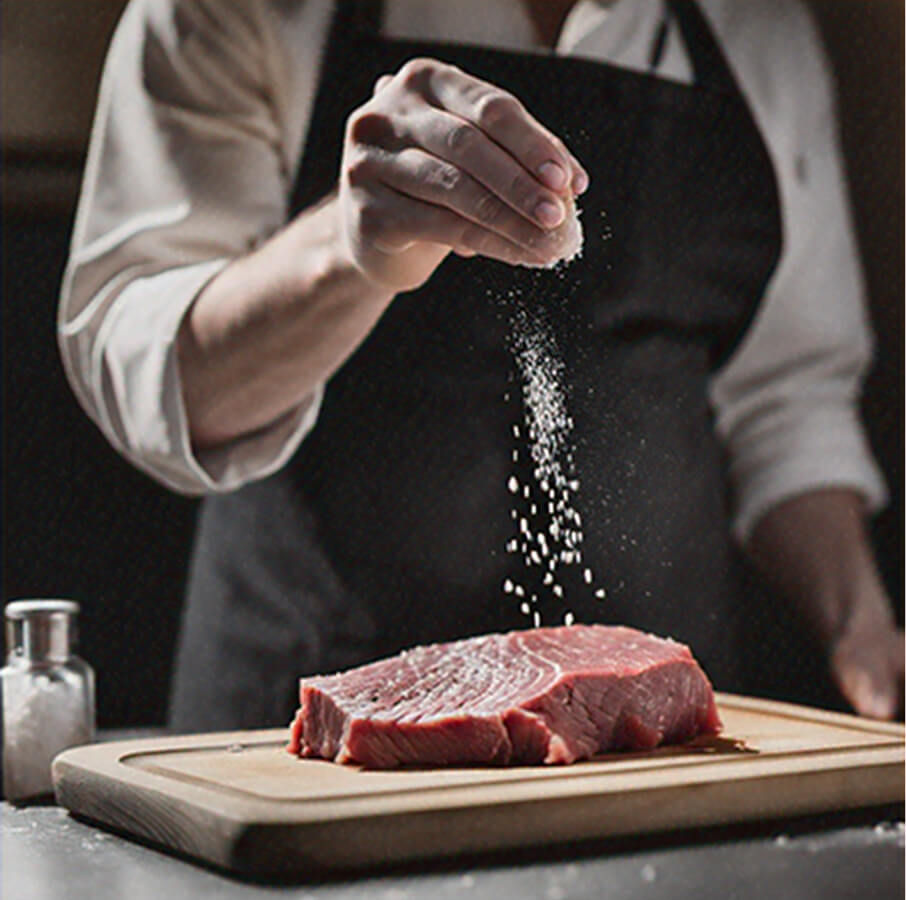
Season the good fresh beef fillets with salt and black pepper. Heat olive oil in a pan over high heat and sear the fillets for 2 minutes per side until it fully browned. Remove the beef from the pan and brush with a thin layer of mustard. Let it cool.
1
Season the good fresh beef fillets with salt and black pepper. Heat olive oil in a pan over high heat and sear the fillets for 2 minutes per side until it fully browned. Remove the beef from the pan and brush with a thin layer of mustard. Let it cool.
1
Season the good fresh beef fillets with salt and black pepper. Heat olive oil in a pan over high heat and sear the fillets for 2 minutes per side until it fully browned. Remove the beef from the pan and brush with a thin layer of mustard. Let it cool.
1
Season the good fresh beef fillets with salt and black pepper. Heat olive oil in a pan over high heat and sear the fillets for 2 minutes per side until it fully browned. Remove the beef from the pan and brush with a thin layer of mustard. Let it cool.
Instructions
Quality Fresh 2 beef fillets ( approximately 14 ounces each )
Quality Fresh 2 beef fillets ( approximately 14 ounces each )
Quality Fresh 2 beef fillets ( approximately 14 ounces each )
Beef Wellington
Beef Wellington
Fusion Wizard - Rooftop Eatery in Tokyo
Author Name
%20(1).jpg)
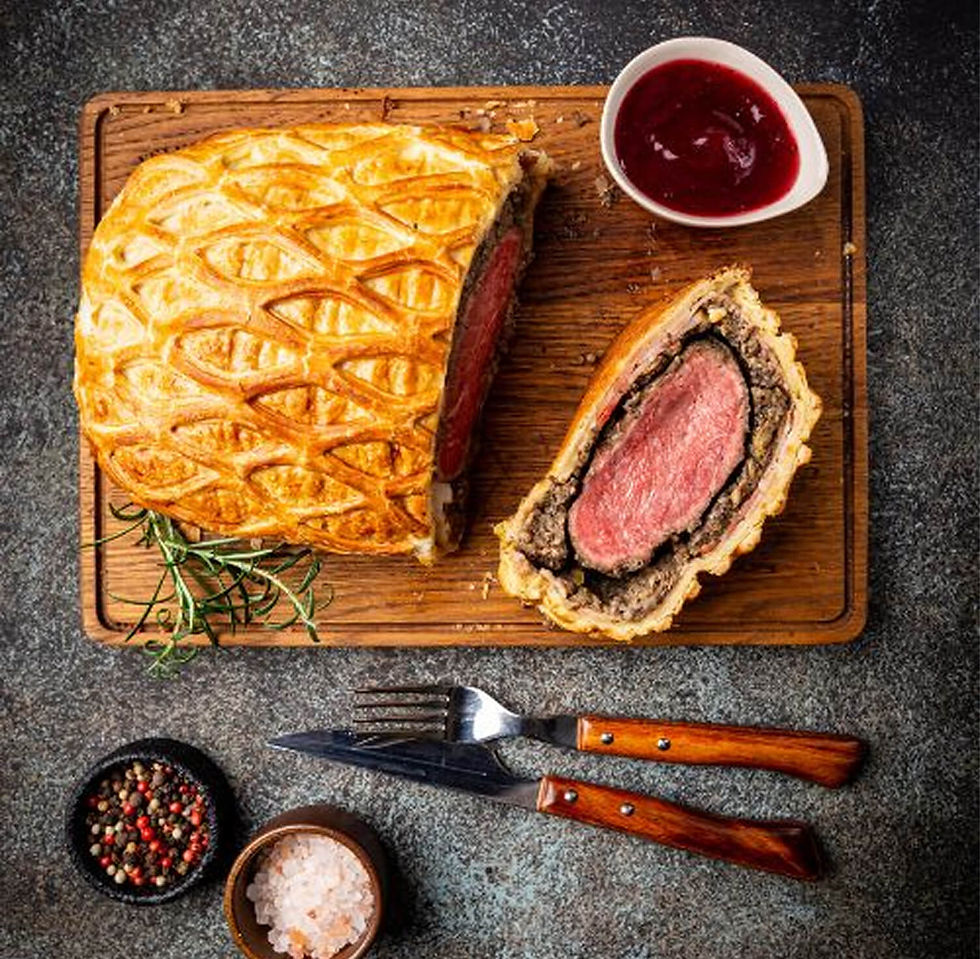
Beef Wellington is a luxurious dish featuring tender beef fillet coated with a flavorful mushroom duxelles and wrapped in a golden, flaky puff pastry. Perfect for special occasions, this recipe combines rich flavors and impressive presentation, making it the ultimate centerpiece for any celebration.
Servings :
4 Servings
Calories:
813 calories / Serve
Prep Time
30 mins
Prep Time
30 mins
Prep Time
30 mins
Prep Time
30 mins


Comments