


Shakshuka – Middle Eastern Huevos Rancheros
- Carol Ann Kates

- Apr 9
- 4 min read

My daughter, Alisa, traveled to Israel a few years ago. Upon her return, our family gathered for dinner to hear about her adventure, see her pictures, and receive the souvenirs she purchased for us.
“Mom, will you make shakshuka when I come for dinner? It’s Middle Eastern huevos rancheros. When I was in Old Jaffa, I ate at a restaurant called Doctor Shakshuka’s. It is located near an antique market in an old stone-arched building. I ordered their signature dish—shakshuka. I loved it, and it’s vegetarian.” (Vegetarian is important to Alisa.)
Being the foodie I am, I had to learn more about Alisa’s new favorite. Just like any popular dish, several countries claim credit for creating shakshuka—among those are Tunisia, Morocco, Yemen, and Turkey. Regardless of its exact origin, immigrants from North Africa introduced it to the Israelites, and it is now one of Israel’s most popular dishes.
When you make shakshuka, you poach eggs in a spicy tomato-bell-pepper sauce. Classic shakshuka recipes include sautéed onions and garlic, plus fragrant cumin and paprika. This dish is delicious for breakfast, lunch, or dinner. What’s fun about making shakshuka is you can add your own personal touch by garnishing it with your favorite crumbled cheese and fresh herbs.
The recipe I made for Alisa follows. I served it with a cucumber tomato salad, also her request, and crusty bread. It was delicious and very filling. We gathered around the table, savoring the food but also her adventures. Thanks to Alisa, shakshuka is my new favorite to serve for Sunday brunch. I love it that my kids continue expanding my culinary repertoire.
Following is a photograph of diners enjoying shakshuka in the quaint courtyard of Doctor Shakshuka’s restaurant in Old Jaffa. Transport yourself to another world and culture, and enjoy shakshuka for breakfast, brunch, or an easy weeknight supper.

Shakshuka
Serves 6
If you don’t have access to Kroger’s® Fire Roasted Diced Tomatoes Salsa Style use fire-roasted or plain diced tomatoes.
For the shakshuka:
1 tablespoon extra virgin olive oil
½ white onion, peeled and diced
2 teaspoons minced garlic
1 green or red bell pepper, cored, seeded, and chopped
2 cans (14-ounces) Kroger® Fire-Roasted Diced Tomatoes Salsa Style
2 tablespoons tomato paste
1 teaspoon chipotle chile powder
1 teaspoon ground cumin
1 teaspoon ground paprika
Cayenne pepper to taste
Salt to taste
Freshly ground black pepper to taste
6 large eggs
For the garnish:
Feta cheese
Fresh minced parsley
Fresh basil leaves
In a large cast-iron skillet or sauté pan, heat olive oil over a medium heat. When the oil sizzles, add onion and sauté until onion begins to soften, about 2 minutes. Add garlic and continue sautéing until garlic is fragrant, about 1 minute more. Add bell pepper and sauté for 5 to 7 minutes, or until pepper softens.
Add diced tomatoes and tomato paste and stir to blend. Add chile powder, cumin, and paprika and stir to blend. Season to taste with cayenne pepper, salt, and pepper.
Crack eggs into individual small bowls or coffee cups and pour each egg one at a time into the tomato mixture, spacing them evenly over the sauce (place 5 eggs around the outer edge of the pan and 1 egg in the center). Cover the skillet and cook eggs to desired doneness. Garnish with feta cheese, parsley, and basil.
Tips on selecting eggs: Only purchase eggs that are in a refrigerated case. Open the carton to make sure the shells are clean and not cracked. Select the appropriate size for your intended use. Check the expiration date to avoid buying out-of-date eggs. Always purchase eggs that have at least two weeks before their “Sell-By” date expires. Egg cartons with a USDA shield must bear a “pack date” (the day the eggs were washed, graded, and placed in their carton. This date is a three-digit code which represents the consecutive day of the year—so January 1 is 001, January 31 is 031, February 1 is 032. December 31 is 365.
Tips on Storing and Using Eggs at Home: Refrigerate eggs immediately upon arriving home. Store them in the coldest part of your refrigerator, not in the door. Eggs should not be left out of the refrigerator for more than 2 hours.
If eggs crack on the way home from the store, break them into a clean container, cover tightly, refrigerate, and use them within 2 days.
It is not necessary to wash eggs purchased at your supermarket. Washing eggs can remove their protective mineral oil coating and increase the possibility of bacteria on the shell entering the egg.
When combining eggs with other ingredients according to recipe directions, cook immediately or refrigerate and cook within 24 hours.
Carol Ann

Carol Ann Kates is the award-winning author of cookbook, Secret Recipes from the Corner Market, and international Amazon best-selling and award-winning author of Grocery Shopping Secrets. She’s an expert in how to shop, select, and store produce for maximizing home cooking outcomes and minimizing time and money spent. As a former supermarket and deli operator, Carol Ann shares grocery-insider wisdom—the same expertise you used to receive when patronizing a mom-and-pop establishment. Contact her at CarolAnn@CarolAnnKates.com and explore her website, www.CarolAnnKates.com.
Copyright 2026 All Rights Reserved Carol Ann Kates
1
Searing the Beef
Sear beef fillets on high heat for 2 minutes per side to form a golden crust. Let it cool before proceeding to keep the beef tender.
1
Searing the Beef
Sear beef fillets on high heat for 2 minutes per side to form a golden crust. Let it cool before proceeding to keep the beef tender.
1
Searing the Beef
Sear beef fillets on high heat for 2 minutes per side to form a golden crust. Let it cool before proceeding to keep the beef tender.
1
Searing the Beef
Sear beef fillets on high heat for 2 minutes per side to form a golden crust. Let it cool before proceeding to keep the beef tender.
Notes


1
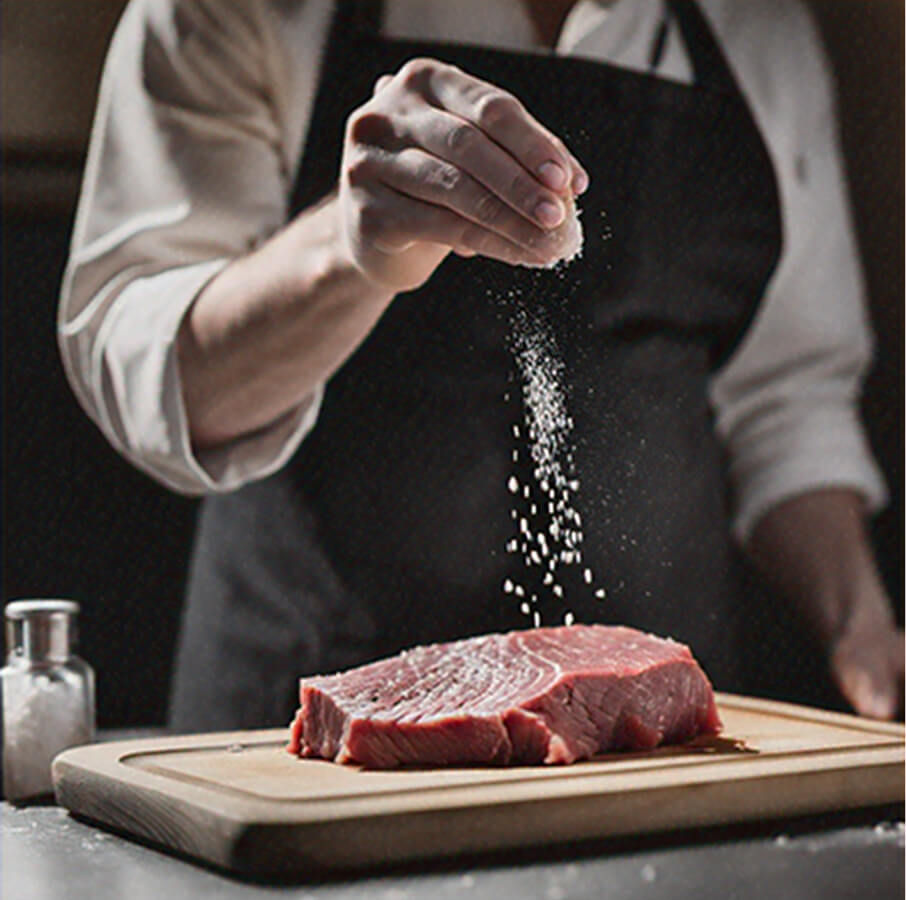
Season the good fresh beef fillets with salt and black pepper. Heat olive oil in a pan over high heat and sear the fillets for 2 minutes per side until it fully browned. Remove the beef from the pan and brush with a thin layer of mustard. Let it cool.
1
Season the good fresh beef fillets with salt and black pepper. Heat olive oil in a pan over high heat and sear the fillets for 2 minutes per side until it fully browned. Remove the beef from the pan and brush with a thin layer of mustard. Let it cool.
1
Season the good fresh beef fillets with salt and black pepper. Heat olive oil in a pan over high heat and sear the fillets for 2 minutes per side until it fully browned. Remove the beef from the pan and brush with a thin layer of mustard. Let it cool.
1
Season the good fresh beef fillets with salt and black pepper. Heat olive oil in a pan over high heat and sear the fillets for 2 minutes per side until it fully browned. Remove the beef from the pan and brush with a thin layer of mustard. Let it cool.
Instructions
Quality Fresh 2 beef fillets ( approximately 14 ounces each )
Quality Fresh 2 beef fillets ( approximately 14 ounces each )
Quality Fresh 2 beef fillets ( approximately 14 ounces each )
Beef Wellington
Beef Wellington
Fusion Wizard - Rooftop Eatery in Tokyo
Author Name
%20(1).jpg)
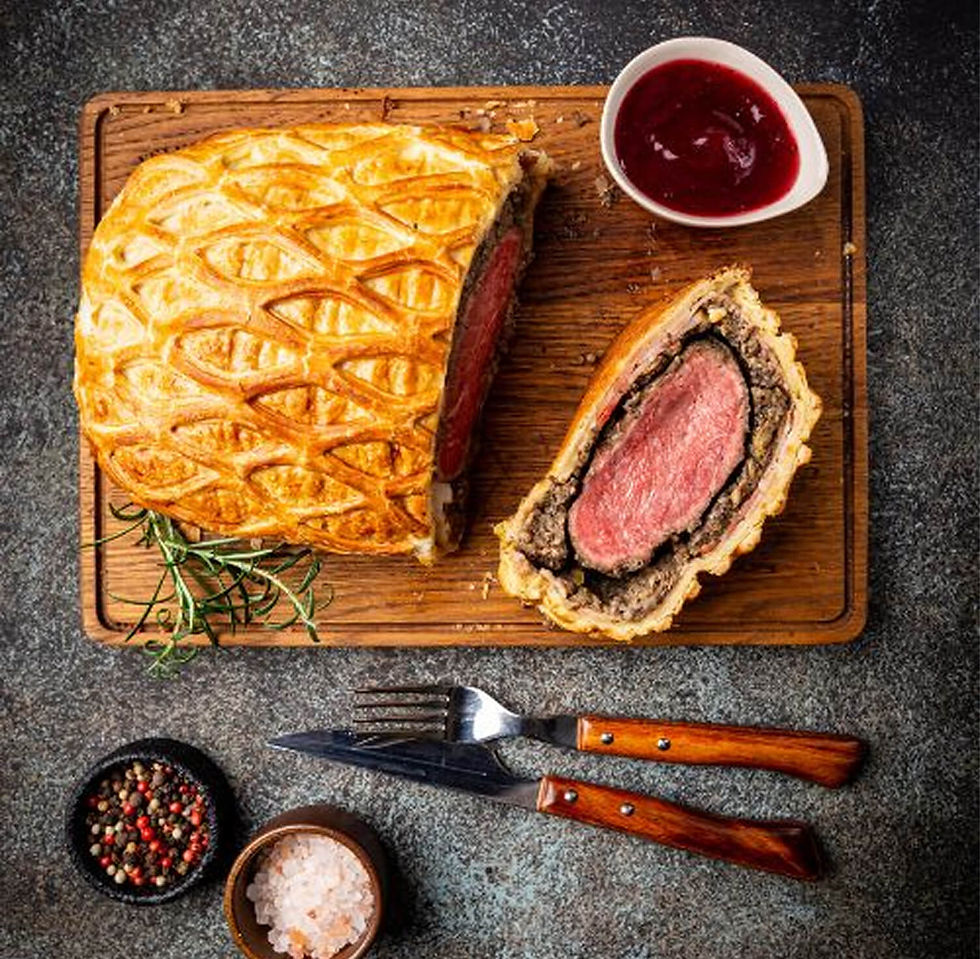
Beef Wellington is a luxurious dish featuring tender beef fillet coated with a flavorful mushroom duxelles and wrapped in a golden, flaky puff pastry. Perfect for special occasions, this recipe combines rich flavors and impressive presentation, making it the ultimate centerpiece for any celebration.
Servings :
4 Servings
Calories:
813 calories / Serve
Prep Time
30 mins
Prep Time
30 mins
Prep Time
30 mins
Prep Time
30 mins


Comments