


Selecting the Best Turkey When Food Prices are Soaring


Thanksgiving is just around the corner, and the centerpiece of that celebration is traditionally turkey. We want the turkey we place on our holiday table to be the absolute best, but this year price is important. We want to spend our money wisely and get the best turkey we can afford. In this week’s blog, I share my knowledge about selecting a turkey as well as my daughter, Jenny’s, favorite Thanksgiving recipe.
Thinking about the price of turkeys brings back a very unpleasant memory for me. After my parents passed away and I became actively involved in our business, I was given the task of pricing turkeys. I’m going to knock this one out of the park. I thought. I decided on 17 cents a pound. Our customers loved this price, but I neglected to say: Limit 2. We sold out of turkeys within a few days. This was a very costly mistake as we had to search high and low to find two more truckloads of turkeys—not an easy feat at Thanksgiving—and, of course, we paid an exorbitant price for those extra birds. Some life lessons are learned the hard way. Don’t you wish turkeys were still 17 cents a pound?
What is the price of turkeys this year? I checked prices at one of my favorite independent stores and found the following:
Whole natural turkey -- $4.99 per pound.
Whole organic turkey -- $5.99 per pound.
Holy cow! I usually get an 18 to 20 pound turkey. That’s at least $100. While some of us can spend that much on just the turkey, most of us can’t.
I priced them at Whole Foods. Organic young turkey is $3.49 per pound. For a 20-pound bird that is about $70.00. Still more than I want to spend.
King Soopers has an early bird price on Butterball® young turkey’s for $1.28 per pound. Wal-Mart has Jennie O® for 84 cents per pound, Butterball® for 97 cents, and Shady Brook Farm® for $2.24.
Some of the labeling on turkey can be confusing. Young? Yes, you want to buy a young turkey, but what is that?
Weighing between 8 to 24 pounds, a young turkey is between 4 to 8 months old. This turkey will be the most tender and have the most flavor. US supermarkets, for the most part, sell young turkeys. You don’t want to purchase a yearling turkey, 12 months of age, or a mature turkey, older than 15 months, as they will be tough and lack flavor.
What does Natural mean?
The term “natural” indicates that the turkey has had limited processing, which means the raw product was not altered during processing. In addition, no artificial ingredients, colorings, or chemical preservatives have been added. A “natural” turkey may or may not be free range, depending on the farm, and can be given antibiotics if it becomes ill.
What does Organic mean?
This label means the turkey is fed only organic feed and is allowed to roam outdoors. In order to be classified organic, it can never receive any antibiotics and must be processed without any added flavorings, coloring, or artificial ingredients. The federal government prohibits the use of growth hormones or steroids in any commercially raised poultry.
Should I buy a fresh or frozen turkey?
The debate over whether to purchase a fresh or frozen turkey can best be answered by the amount of space you have in your refrigerator for storage and the time required for safe thawing. If you shop ahead of time, it is safer to purchase a frozen turkey. If you purchase your turkey 1 to 2 days before cooking, you can feel safe purchasing a fresh bird.
A fresh turkey has never been held at a temperature colder than 26 degrees F. Even though water freezes at 32 degrees, turkey meat will remain pliable at this temperature. Fresh turkeys will cost more than frozen because their temperature needs require special handling. Your supermarket should keep fresh turkeys between 38 to 40 degrees F.
Commercially frozen turkeys are flash frozen. This is a process that cools them rapidly to 0 degrees F. Flash freezing ensures that the turkey will have the same level of freshness as the day it was frozen. There is, therefore, no difference in quality between fresh or frozen. Flash frozen turkeys will keep up to 1 year. They will maintain their quality better than turkeys frozen at home.
Should my turkey be graded?
The USDA inspects most turkeys and grades them A, B, or C. You will know your turkey has been inspected if its wrapper bears a USDA shield. If a turkey is graded A, it is plump, has good body shape, and all its pin-feathers have been removed. It also lacks cuts, bruises, broken bones, and has no missing parts. Turkeys not graded A are safe to eat but their overall quality will be inferior.
Natural turkeys are inspected but not graded. If you are buying a natural turkey, give it a good feel to be sure it has all its body parts. Nothing like putting a one-legged turkey on your table, especially when two members of the family are fond of drumsticks. This is not a joke. It happened to a friend. Such a disappointment.
What is the best brand to buy?
I personally prefer to purchase a name brand fresh turkey the day before I plan to use it. I have had good luck with Butterball®, Honey Suckle®, and Red Bird® brands. Many supermarkets advertise rock-bottom specials on turkeys at Thanksgiving. Be extra careful when purchasing really cheap birds because often times they are defective. I prefer to stick with well-known brand names to ensure a quality turkey.
Should I buy a basted or self-basted turkey?
Some bone-in poultry carries the term “basted” or “self-basted” on its label. Many turkeys sold in supermarkets are injected or marinated with a solution that contains butter or some other edible fat, broth, stock, or water plus spices and other flavor enhancers. I avoid buying turkeys that have been “basted” with a solution containing sodium phosphate. Red Bird Farms® sells natural turkeys that are not injected.
My Daughter Jenny’s Favorite Thanksgiving Stuffing
Serves 8 to 10
For the stuffing:
12 ounces dried apricots, diced
1 cup Grand Marnier®
In a small saucepan, place apricots and 1 cup Grand Marnier® over a medium heat and bring to a boil. Remove from the heat and set aside.
½ cup butter
2 cups white onion, chopped
2 cups celery, chopped
½ pound bulk pork sausage
24 ounces Pepperidge Farm® Herb Seasoned Classic Stuffing
1 cup slivered almonds
¼ cup butter
3 cups canned chicken broth
½ cup Grand Marnier®
½ teaspoon dried thyme
½ teaspoon salt
Large grind black pepper to taste
In a large skillet, melt ½ cup butter over a medium heat. Add onion and celery and sauté for 10 minutes, or until vegetables are tender. Transfer to a large mixing bowl and set aside.
Cook pork sausage in the same skillet, crumbling with a fork, until sausage is no longer pink. Remove from the heat, drain any excess grease, and add to the onion mixture. In a large bowl, add stuffing mix, apricots with liquid, and slivered almonds to the onion mixture. Mix thoroughly.
Heat remaining ¼ cup butter and chicken broth in a small saucepan over a medium heat just until butter melts. Pour over stuffing mixture and add remaining ½ cup Grand Marnier®, thyme, and salt. Mix well to evenly moisten stuffing. Season to taste with pepper. Makes enough stuffing for a 20-pound turkey.
For the turkey:
1 turkey (about 20 pounds) ready to cook
2 oranges, cut in half
¼ cup butter, softened to room temperature
1 teaspoon dried thyme
Salt to taste
Large grind black pepper to taste
Preheat the oven to 325 degrees F. Wash turkey according to the directions that follow in Tips on prepping turkey. Squeeze juice from oranges evenly over outside of turkey and in neck and body cavities. Spoon stuffing loosely into the cavities. Set extra stuffing aside. Close cavities with small trussing skewers. Place turkey on a roasting rack in a roasting pan breast side up. Spread butter over the skin of turkey and sprinkle with thyme, salt, and pepper to taste. Cover with aluminum foil, pressing the foil lightly at drumstick and breast ends. Avoid letting the foil touch the top or sides. Roast for 3 hours. Remove the foil and roast, basting occasionally until juices run clear when meaty part of the thigh is pierced with a sharp skewer, about 3 more hours. Bake leftover stuffing in a covered baking dish at 325 degrees F for 30 minutes.
Cooking tip: For a smoother Thanksgiving morning, chop the onion, celery, and apricots the night before. Place them in covered containers and refrigerate until it’s time to stuff your bird. This stuffing is so good you will want to extract every bite. Try inserting a piece of cheesecloth into the bird’s cavity before stuffing. When you remove the cloth, all the stuffing comes magically out all at once.
Tips on preparing turkey: The night before cooking your turkey, remove giblets from the cavity. Rinse the thawed turkey thoroughly, both inside the bird’s two cavities and the outside skin. During rinsing, remove any pinfeathers or loose skin that might have been missed in processing. Scrape any remaining innards from the cavity. Pat the bird dry and place it in a roaster, cover with damp paper towels, and refrigerate until ready to stuff. Remove giblets from the wrapper, wash, place in a covered container, and refrigerate.
When you are ready to stuff the turkey, lightly salt the large cavity. Gently spoon in the stuffing, lightly filling both cavities to capacity. If the large cavity has a band of skin across the tail, push drumsticks under the tail. It is not necessary to fasten the opening. If there is no skin, close the opening by placing skewers across it and lacing it shut with a cord. Tie the drumsticks to the tail. Dental floss works well for lacing.
Carol Ann

Carol Ann Kates is the award-winning author of cookbook, Secret Recipes from the Corner Market, and international Amazon best-selling and award-winning author of Grocery Shopping Secrets. She’s an expert in how to shop, select, and store produce for maximizing home cooking outcomes and minimizing time and money spent. As a former supermarket and deli operator, Carol Ann shares grocery-insider wisdom—the same expertise you used to receive when patronizing a mom-and-pop establishment. Contact her at CarolAnn@CarolAnnKates.com and explore her website, www.CarolAnnKates.com.
Copyright 2026 All Rights Reserved Carol Ann Kates
1
Searing the Beef
Sear beef fillets on high heat for 2 minutes per side to form a golden crust. Let it cool before proceeding to keep the beef tender.
1
Searing the Beef
Sear beef fillets on high heat for 2 minutes per side to form a golden crust. Let it cool before proceeding to keep the beef tender.
1
Searing the Beef
Sear beef fillets on high heat for 2 minutes per side to form a golden crust. Let it cool before proceeding to keep the beef tender.
1
Searing the Beef
Sear beef fillets on high heat for 2 minutes per side to form a golden crust. Let it cool before proceeding to keep the beef tender.
Notes


1
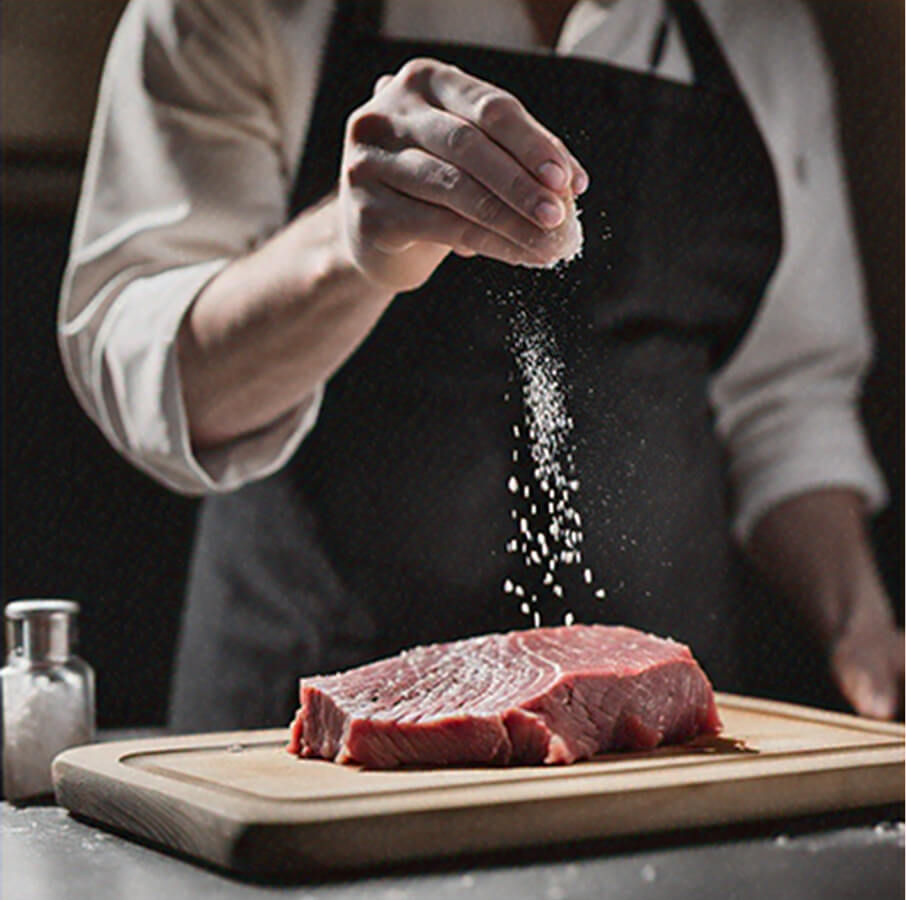
Season the good fresh beef fillets with salt and black pepper. Heat olive oil in a pan over high heat and sear the fillets for 2 minutes per side until it fully browned. Remove the beef from the pan and brush with a thin layer of mustard. Let it cool.
1
Season the good fresh beef fillets with salt and black pepper. Heat olive oil in a pan over high heat and sear the fillets for 2 minutes per side until it fully browned. Remove the beef from the pan and brush with a thin layer of mustard. Let it cool.
1
Season the good fresh beef fillets with salt and black pepper. Heat olive oil in a pan over high heat and sear the fillets for 2 minutes per side until it fully browned. Remove the beef from the pan and brush with a thin layer of mustard. Let it cool.
1
Season the good fresh beef fillets with salt and black pepper. Heat olive oil in a pan over high heat and sear the fillets for 2 minutes per side until it fully browned. Remove the beef from the pan and brush with a thin layer of mustard. Let it cool.
Instructions
Quality Fresh 2 beef fillets ( approximately 14 ounces each )
Quality Fresh 2 beef fillets ( approximately 14 ounces each )
Quality Fresh 2 beef fillets ( approximately 14 ounces each )
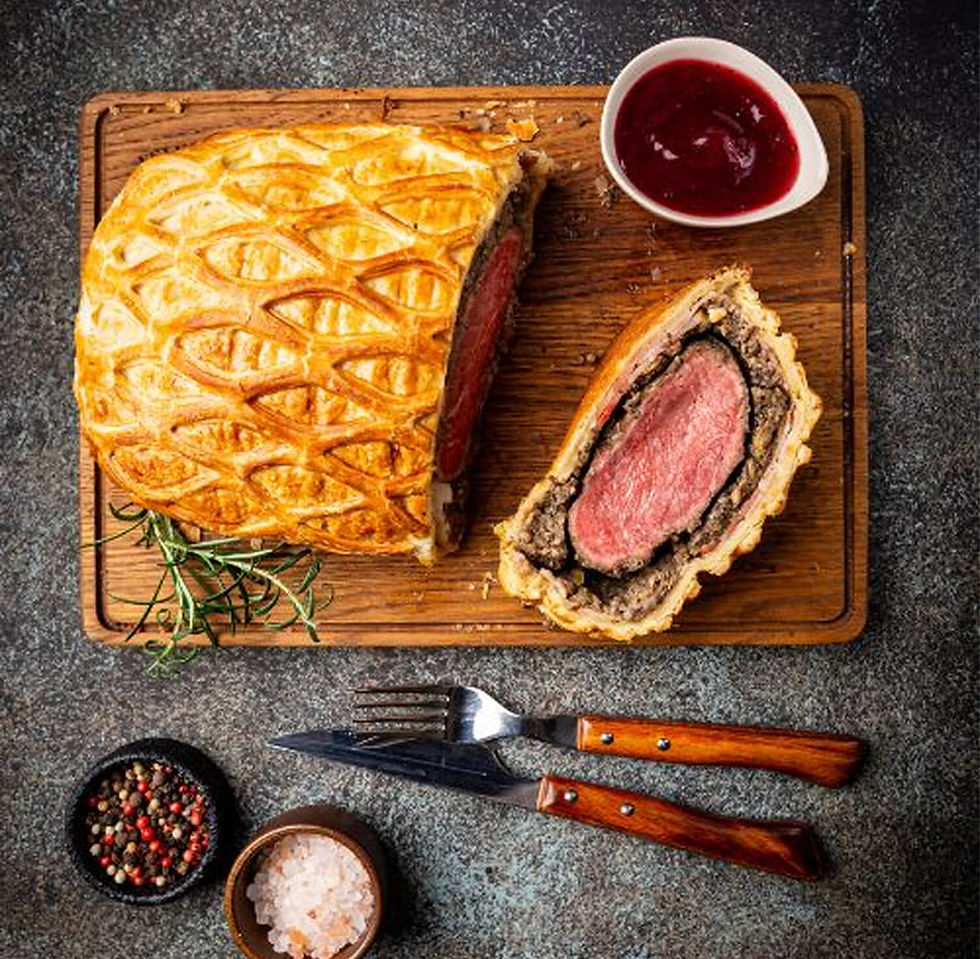
Beef Wellington
Beef Wellington
Fusion Wizard - Rooftop Eatery in Tokyo
Author Name

Beef Wellington is a luxurious dish featuring tender beef fillet coated with a flavorful mushroom duxelles and wrapped in a golden, flaky puff pastry. Perfect for special occasions, this recipe combines rich flavors and impressive presentation, making it the ultimate centerpiece for any celebration.
Servings :
4 Servings
Calories:
813 calories / Serve
Prep Time
30 mins
Prep Time
30 mins
Prep Time
30 mins
Prep Time
30 mins


Comments