


Roasted Red Pepper Soup – the Perfect Soup to Transition from Summer into Fall
- ckcallighan20209
- Sep 11, 2025
- 5 min read
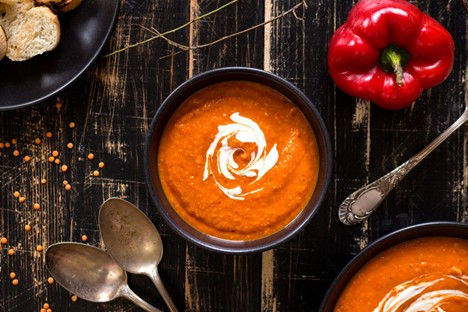
This flavorful soup is our new favorite to eat as we transition from summer to fall. Like many soups, it is tastier the next day, so it’s a good recipe to make ahead. It will remain safe to consume when stored in an airtight container and refrigerated for three days after you make it.
Most vegetables, even red bell peppers, can be frozen, though their texture when thawed may be softer and mushier than when they are fresh. You can’t use thawed, frozen veggies in salads, but they can be used for cooking in soups, casseroles, and pasta dishes. If you grew red bell peppers in your garden or purchased them at a good price, you can freeze them and, when thawed, use them in this soup recipe. At the end of the recipe are tips on freezing red bell peppers.
Roasted Red Bell Pepper Soup
Makes 4 servings
Serve with crusty bread and a green salad.
6 red bell peppers, cored, seeded, and cut into 1-inch pieces
3 tablespoons extra virgin olive oil, divided
Salt to taste
Freshly ground black pepper to taste
1 yellow onion, finely chopped
3 teaspoons minced garlic
5 sun-dried tomatoes
1 ½ cups vegetable stock
1 ½ teaspoons fresh thyme leaves,
¾ teaspoon crushed red pepper flakes
1 ½ cups half-and-half
Crème fraiche for garnish
Preheat the oven to 400 degrees F. Place red bell peppers in a large baking dish. Drizzle with 2 tablespoons olive oil and season to taste with salt and pepper. Roast in the oven until slightly charred, about 40 minutes.
In a large kettle, place 1 tablespoon olive oil over a medium heat. When the oil sizzles, add onion and sauté about 2 minutes. Add garlic and continue to sauté until onion is transparent.
To the same kettle, add roasted peppers, sun-dried tomatoes, vegetable stock, thyme leaves, and crushed red bell pepper. Lower the heat and simmer for 10 minutes.
Place the red bell pepper mixture in a blender and process until smooth. Return the bell pepper mixture to the kettle. Add half-and-half and simmer until heated through.
Ladle into soup bowls and garnish with crème fraiche.
Tips on selecting bell peppers: Look for fresh, firm peppers that are bright and thick-fleshed with a firm green calyx and stem. Bell peppers should feel heavy for their size and have a crisp, shiny skin. Do not buy bell peppers with wrinkled skin or any soft or brown spots. Bell peppers have lobes on the top. The number of lobes can help you determine which pepper to buy. Bell peppers with four or more lobes are better for eating raw. Peppers with three lobes are better for roasting, sautéing, or grilling.
Tips on storing bell peppers: Sweet bell peppers will keep in the refrigerator for 3 to 4 days. It is best not to wash bell peppers until you are ready to use them.
Tips on freezing vegetables: Most fresh vegetables can be frozen, though the texture of some vegetables when thawed may be softer and mushier than when they are fresh. You may not be able to use these vegetables in salads, but they can be used for cooking in soups, casseroles, and pasta dishes.
Buy high-quality freezer bags or containers that seal tightly. Choose the size of bag that is appropriate for the amount of vegetables you wish to freeze. If you are freezing individual portions, consider placing smaller bags into a larger bag. This will help prevent freezer burn. If you use containers, leave about a ½-inch space at the top to allow for food to expand. If you use bags, press as much air out of the bag as possible before sealing.
Wash vegetables thoroughly in cold water before freezing. Discard any part that is poor quality. Pat dry with paper or kitchen towels, and allow the veggies to dry thoroughly before freezing. If you find insects present in any veggies you want to freeze, like broccoli or cauliflower, soak the veggies for 30 minutes in a solution of 4½ teaspoons of salt to 1 gallon of water.
When you freeze vegetables, prep them the same as you would when using them fresh; for example, if you normally peel carrots, peel them before freezing. Think about how you will use them once they are thawed. Leave veggies whole or cut them into pieces, depending upon the recipe you will use them in. If you plan to use frozen carrots in a stew, cut them into appropriately sized pieces. Portion the veggies and/or pieces into serving sizes and package accordingly.
Most vegetables need to be blanched before freezing. Blanching cleans the surface of dirt and organisms, retards the loss of vitamins, and helps retain flavor, color, and texture. There are two types of blanching—water and steam. I do not recommend using a microwave oven to blanch. Once veggies are blanched, they should be drained, cooled, and dry before they are packaged and frozen. Never freeze hot vegetables.
Water Blanching: Water blanching is the most common method used to prepare veggies for freezing. Using a blancher with a blanching basket and cover is best. If you don’t have one, a wire basket and a large kettle with a lid will work. Use 1 gallon of water for every pound of veggies. Fill the blancher with water and bring the water to a rolling boil over a high heat. Place the veggies in the blanching basket or wire basket and submerge the basket into the water. Cover. When the water returns to a rolling boil, set the timer. Specific times for blanching different veggies.
Steam Blanching: To steam blanch, use a large kettle with a cover and a basket that will hold the veggies 3 inches above the bottom of the kettle. Fill the kettle with an inch or two of water and bring the water to a rolling boil over a high heat. Place the veggies in a single layer so that the pieces will receive equal amounts of steam. After blanching, drain vegetables and cool completely. Make sure the vegetables are completely dry before freezing.
Lay veggies in a single layer on a baking sheet lined with parchment paper so that the pieces won’t stick to the pan. Freeze for a few hours until the vegetable is solid, then transfer it to an airtight container or a freezer bag. Press as much air out of the bag as possible. This helps prevent freezer burn. Use a black marker to label packages with the contents and freezing date. Freeze at 0 degrees F or lower. Frozen veggies do not need to be thawed before they are cooked. Blanching times vary according to the vegetable and its size. Preparation instructions for veggies that need blanching as well as times are found in my book, Grocery Shopping Secrets.
To freeze sweet bell peppers: Cut the pepper in half, remove stems and seeds. Halved sweet bell peppers can be frozen or they can be cut into ½-inch strips or rings. Blanch halved bell peppers for 3 minutes. Blanch strips or rings for 2 minutes.
Carol Ann

Carol Ann Kates is the award-winning author of cookbook, Secret Recipes from the Corner Market, and international Amazon best-selling and award-winning author of Grocery Shopping Secrets. She’s an expert in how to shop, select, and store produce for maximizing home cooking outcomes and minimizing time and money spent. As a former supermarket and deli operator, Carol Ann shares grocery-insider wisdom—the same expertise you used to receive when patronizing a mom-and-pop establishment. Contact her at CarolAnn@CarolAnnKates.com and explore her website, www.CarolAnnKates.com.
Copyright 2025 All Rights Reserved Carol Ann Kates
1
Searing the Beef
Sear beef fillets on high heat for 2 minutes per side to form a golden crust. Let it cool before proceeding to keep the beef tender.
1
Searing the Beef
Sear beef fillets on high heat for 2 minutes per side to form a golden crust. Let it cool before proceeding to keep the beef tender.
1
Searing the Beef
Sear beef fillets on high heat for 2 minutes per side to form a golden crust. Let it cool before proceeding to keep the beef tender.
1
Searing the Beef
Sear beef fillets on high heat for 2 minutes per side to form a golden crust. Let it cool before proceeding to keep the beef tender.
Notes


1
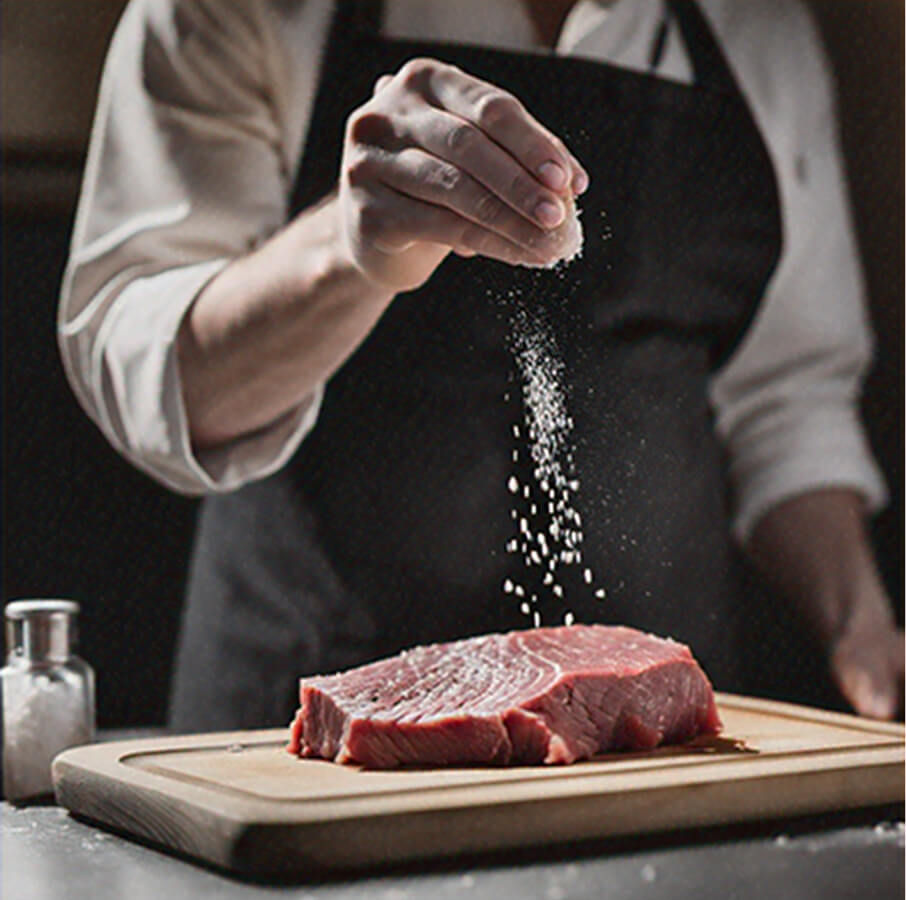
Season the good fresh beef fillets with salt and black pepper. Heat olive oil in a pan over high heat and sear the fillets for 2 minutes per side until it fully browned. Remove the beef from the pan and brush with a thin layer of mustard. Let it cool.
1
Season the good fresh beef fillets with salt and black pepper. Heat olive oil in a pan over high heat and sear the fillets for 2 minutes per side until it fully browned. Remove the beef from the pan and brush with a thin layer of mustard. Let it cool.
1
Season the good fresh beef fillets with salt and black pepper. Heat olive oil in a pan over high heat and sear the fillets for 2 minutes per side until it fully browned. Remove the beef from the pan and brush with a thin layer of mustard. Let it cool.
1
Season the good fresh beef fillets with salt and black pepper. Heat olive oil in a pan over high heat and sear the fillets for 2 minutes per side until it fully browned. Remove the beef from the pan and brush with a thin layer of mustard. Let it cool.
Instructions
Quality Fresh 2 beef fillets ( approximately 14 ounces each )
Quality Fresh 2 beef fillets ( approximately 14 ounces each )
Quality Fresh 2 beef fillets ( approximately 14 ounces each )
Beef Wellington
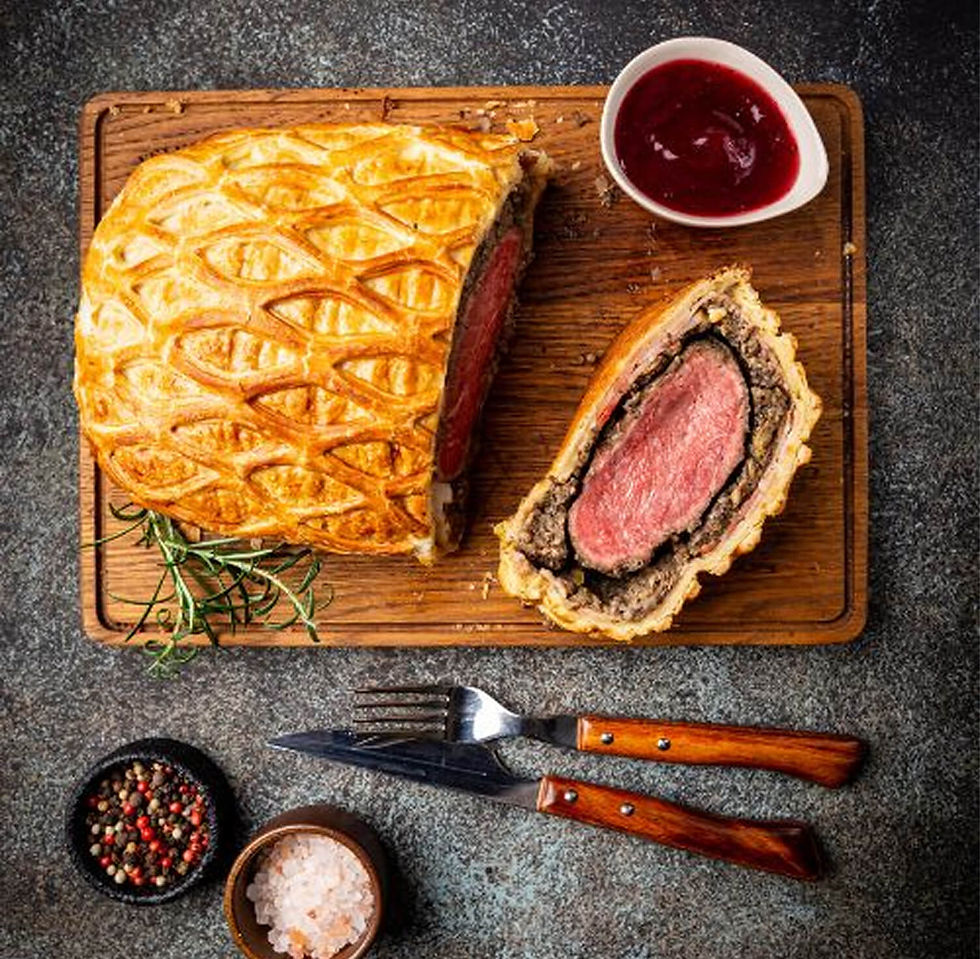
Beef Wellington
Fusion Wizard - Rooftop Eatery in Tokyo
Author Name
%20(1).jpg)
Beef Wellington is a luxurious dish featuring tender beef fillet coated with a flavorful mushroom duxelles and wrapped in a golden, flaky puff pastry. Perfect for special occasions, this recipe combines rich flavors and impressive presentation, making it the ultimate centerpiece for any celebration.
Servings :
4 Servings
Calories:
813 calories / Serve
Prep Time
30 mins
Prep Time
30 mins
Prep Time
30 mins
Prep Time
30 mins


Comments