


My Mother's Peach Pie
- ckcallighan20209
- Jul 24, 2025
- 4 min read

When I was little girl and peaches were in season, every summer without fail my mother made the most delicious peach pie. We would wait in anticipation for Palisade peaches to arrive at my father’s grocery store. Dad purchased the peaches directly from a Palisade farmer, who would bring a truck load of peaches straight from the orchard to his market. I miss the independent markets where owners personally selected the items they sold.
When the peaches arrived, Dad picked out the cream of the crop himself and brought them home so that Mom could make pie. Now, she made delicious lemon and coconut méringue pies, but peach was her specialty. It might have had something to do with the peaches. Palisade peaches, also known as “sink” peaches, are so juicy you have to eat them over the sink.
Palisade peaches are grown on the Western Slope of Colorado near Grand Junction in the town of Palisades. Grand Junction's unique environment creates some of the juiciest fruit in the world. The combination of warm days, cool nights, mineral rich soil, and high elevation is the perfect environment to create some of the juiciest fruit in the world. In fact, Palisade peaches are considered juicier and sweeter than the Georgia Peach. Now that’s something.
The following is my mother’s recipe for peach pie. Her cooking style was like her personality—simple, down-to-earth, and practical. She was a bit of a perfectionist, and it showed in the meals she prepared. They were flawless. If you are going to make Pauline’s Peach Pie, be sure and get Palisade peaches.
Pauline’s Peach Pie
For the filling:
5 cups fresh peaches, cored, skinned, and sliced
1 cup sugar
3 tablespoons flour
⅛ teaspoon ground nutmeg
⅛ teaspoon ground cinnamon
Dash salt
In a large bowl, place peach slices. In a small bowl, combine sugar, flour, nutmeg, cinnamon, and salt. Mix dry ingredients and toss gently with peaches.
For the crust:
2 cups all-purpose flour, sifted
1 teaspoon salt
⅔ cup Crisco® shortening
5 to 7 tablespoons cold water
Flour for flouring work surface
Preheat the oven to 400 degrees F. In a large bowl, sift flour and salt together. Add shortening and cut in with a pastry blender or a fork until the mixture is the size of small peas. The smaller the pieces, the more tender the pastry.
Sprinkle 1 tablespoon water over the mixture and gently toss with a fork. Repeat this process until the mixture is moist. The less water that is added, the more tender the pastry. It is not necessary to add all of the water.
Form the mixture into a ball. Divide the dough into 2 equal parts. Flatten each ball on a lightly floured surface by pressing it with the edges of your hand 3 times across in both directions. Using a rolling pin, roll the dough from the center out to the edges until the dough is ⅛-inch thick.
Line the bottom of a pie plate with one rolled pastry section. Trim the dough around the outside edges of the pie plate leaving 1 inch of dough.
To assemble the pie:
2 tablespoons butter
Fill the bottom of the pie plate with peach filling. Dot the filling with butter.
Using a pastry wheel or knife, cut strips of the second rolled pastry section into ½-inch strips. Lay strips on the filled pie at 1-inch intervals. Fold back alternating strips so that the strips weave in and out. Trim the lattice strips evenly with the outer rim of the pie plate. Fold the bottom crust over the strips. Seal and flute the edge of the pie crust. Bake for 45 to 40 minutes, or until the crust is golden brown.
Tips on selecting peaches: Peaches should have a well-defined crease, a sweet fragrance, and be soft to the touch, not mushy. Do not buy peaches that have “green shoulders” around the stem end. This is an indication the peach was picked prematurely. Peaches with large, flattened bruises will not ripen well. If the skin of the fruit is shriveled at the stem end or has turned a red-brown color, the peach is over ripe.
Tips on storing peaches: To ripen peaches, place them in a cool place, with their stem end down. If the peaches give slightly when pressed and are becoming fragrant, they are ready to eat. Handle peaches and nectarines gently as any bruising will show. Once ripe, these fruits will keep in the refrigerator for 3 to 5 days.
Carol Ann

Carol Ann Kates is the award-winning author of cookbook, Secret Recipes from the Corner Market, and international Amazon best-selling and award-winning author of Grocery Shopping Secrets. She’s an expert in how to shop, select, and store produce for maximizing home cooking outcomes and minimizing time and money spent. As a former supermarket and deli operator, Carol Ann shares grocery-insider wisdom—the same expertise you used to receive when patronizing a mom-and-pop establishment. Contact her at CarolAnn@CarolAnnKates.com and explore her website, www.CarolAnnKates.com.
Copyright 2025 All Rights Reserved Carol Ann Kates
1
Searing the Beef
Sear beef fillets on high heat for 2 minutes per side to form a golden crust. Let it cool before proceeding to keep the beef tender.
1
Searing the Beef
Sear beef fillets on high heat for 2 minutes per side to form a golden crust. Let it cool before proceeding to keep the beef tender.
1
Searing the Beef
Sear beef fillets on high heat for 2 minutes per side to form a golden crust. Let it cool before proceeding to keep the beef tender.
1
Searing the Beef
Sear beef fillets on high heat for 2 minutes per side to form a golden crust. Let it cool before proceeding to keep the beef tender.
Notes


1
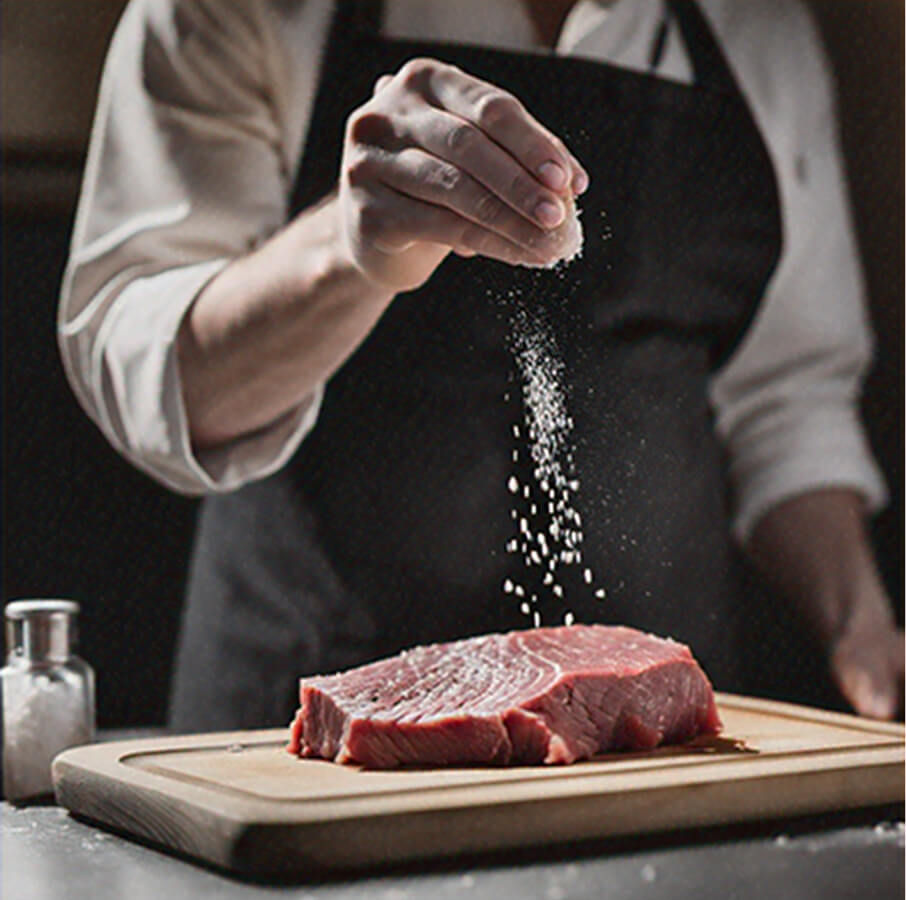
Season the good fresh beef fillets with salt and black pepper. Heat olive oil in a pan over high heat and sear the fillets for 2 minutes per side until it fully browned. Remove the beef from the pan and brush with a thin layer of mustard. Let it cool.
1
Season the good fresh beef fillets with salt and black pepper. Heat olive oil in a pan over high heat and sear the fillets for 2 minutes per side until it fully browned. Remove the beef from the pan and brush with a thin layer of mustard. Let it cool.
1
Season the good fresh beef fillets with salt and black pepper. Heat olive oil in a pan over high heat and sear the fillets for 2 minutes per side until it fully browned. Remove the beef from the pan and brush with a thin layer of mustard. Let it cool.
1
Season the good fresh beef fillets with salt and black pepper. Heat olive oil in a pan over high heat and sear the fillets for 2 minutes per side until it fully browned. Remove the beef from the pan and brush with a thin layer of mustard. Let it cool.
Instructions
Quality Fresh 2 beef fillets ( approximately 14 ounces each )
Quality Fresh 2 beef fillets ( approximately 14 ounces each )
Quality Fresh 2 beef fillets ( approximately 14 ounces each )
Beef Wellington
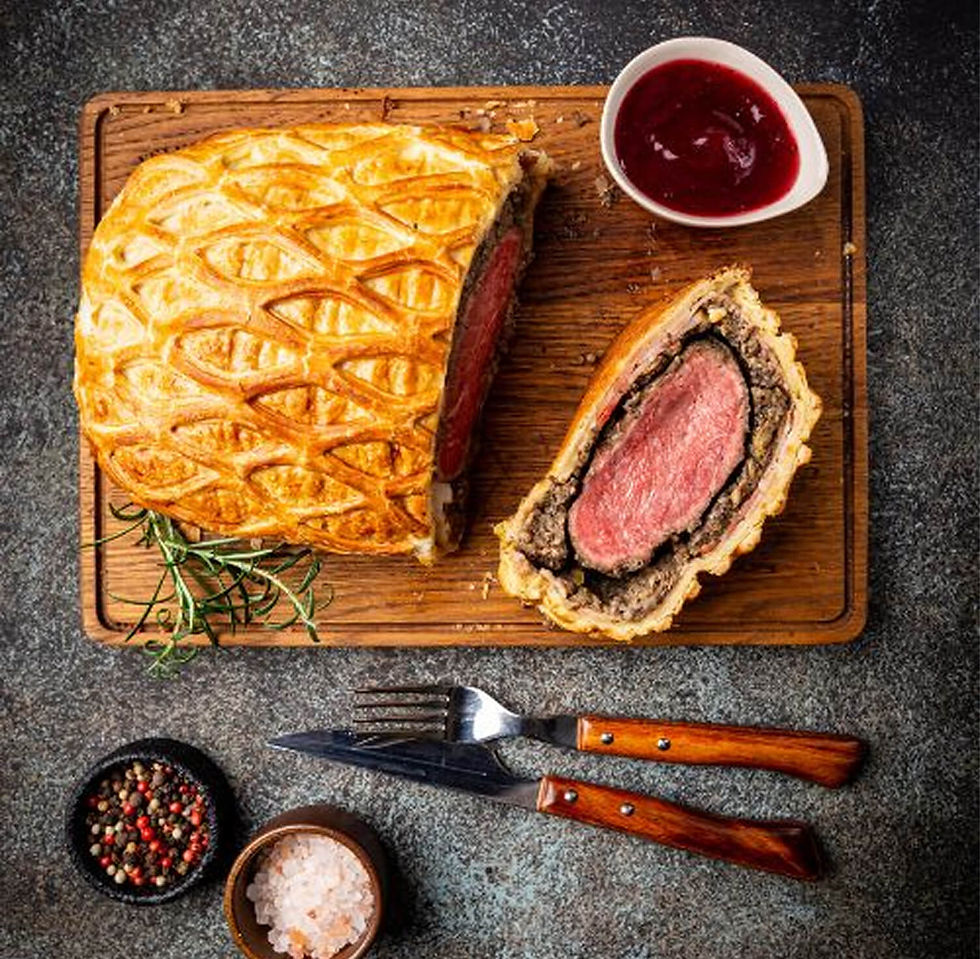
Beef Wellington
Fusion Wizard - Rooftop Eatery in Tokyo
Author Name
%20(1).jpg)
Beef Wellington is a luxurious dish featuring tender beef fillet coated with a flavorful mushroom duxelles and wrapped in a golden, flaky puff pastry. Perfect for special occasions, this recipe combines rich flavors and impressive presentation, making it the ultimate centerpiece for any celebration.
Servings :
4 Servings
Calories:
813 calories / Serve
Prep Time
30 mins
Prep Time
30 mins
Prep Time
30 mins
Prep Time
30 mins


Comments