


Bratwurst with Braised Red Cabbage and Honeycrisp Apples


I subscribe to several food magazines, read dozens of recipes every week, and follow multiple food blogs, always trying to keep up on the latest food trends. Recently, I found a recipe in Country Living Magazine that looked delicious and sounded perfect for fall—Seared Sausages with Red Cabbage and Pink Lady Apples. I decided to make it, but as I made my shopping list, I stopped. Country Living Magazine used Italian sausages, which they seared and then simmered in red cabbage. Really? It’s October. Shouldn’t it be bratwurst?
Country Living Magazine had several recipes using apples. Even though apples are available year-round, just like Country Living, we cook more with apples in the fall. Have you ever wondered what kind of apples are best for cooking? There are over 2,500 varieties of apples grown in the United States and more than 7,500 grown worldwide, and growers are constantly developing new varieties. That’s a lot of apples to choose from.
Apples are grouped into four categories based upon their usage: eating (snacks and desserts), cooking (baking), crabapples (jelly), and those used for cider. Apple connoisseurs believe the best eating apples found in the supermarket are the Gala, Macoun, McIntosh Red, Minneisla SweeTango, Red Delicious, and Pacific Rose. While some of these apples are good for cooking, the Red Delicious is not.
The following varieties are good for both eating and baking: Braeburn, Fuji, Gala, Golden Delicious, Granny Smith, Honeycrisp, Jonagold, Jonathan, Minneiska SweeTango, Mutsu (also called Crispin), Pink Lady (also called Cripps Pink), Winesap, and Zestar! The variety considered good for baking but not eating is the Rome Beauty. The most popular variety for making pies is the Granny Smith. If you want to make a whole baked apple, you want a variety that will hold its shape well and not turn to mush when baked—a Braeburn, Granny Smith, Honeycrisp, Pink Lady, or Rome Beauty.
We rarely find crabapples in our supermarket. If we want to make jelly or wine with crabapples, we might find them at the farmers’ market, local farms, or in our backyard. Of the varieties sold in the supermarket, the Jonathan and Winesap apples are used in making cider.
Do you like an apple that is sweeter or tarter? I found the following chart interesting:

Following is my version of Country Living’s perfect fall supper using bratwurst. I simmered my bratwurst in lager beer and then seared them. I browned my apples first and then added the red cabbage and yellow onion. Country Living Magazine used red onion rather than yellow.
Carol Ann’s Bratwurst with Braised Red Cabbage and Honeycrisp Apples
Serves 4
1 pound Johnsonville® bratwurst
1 can (12 ounces) lager beer
2 tablespoons olive oil, divided
2 apples, Honeycrisp, Pink Lady, or Granny Smith, cut in half (cores not removed)
½ head red cabbage, sliced ½-inch thick
1 yellow onion, cut in half and sliced thin
Salt to taste
Freshly ground pepper to taste
1 cup apple cider
2 tablespoons apple cider vinegar
In a high-sided skillet, place bratwurst, beer, and enough water to cover brats. Bring to a boil, then reduce heat to low so that the liquid bubbles softly. Simmer sausages about 15 to 20 minutes, or until they turn gray-white and reach an internal temperature of about 155 to 165 degrees F. Remove with tongs and transfer to a plate.
Drain liquid from the high-sided skillet. Add 1 tablespoon olive oil to the skillet and place over a medium heat. When oil sizzles, add brats and brown on both sides, about 2 to 3 minutes per side. Transfer brats to a plate.
In a separate large skillet, place 1 tablespoon olive oil over a medium heat. When oil sizzles, add apples, cut-side down and cook until apples are golden brown, about 3 to 4 minutes. Remove apples. Add cabbage, onion, apple cider, and apple cider vinegar and stir to combine. Nestle apples among the veggies. Simmer until veggies are cooked through and apples are tender, about 15 to 20 minutes. To test for doneness: when a sharp knife is inserted into apples they should be soft yet firm. Add the brats to the red cabbage mixture the last few minutes of cooking so they are heated through.
Tips on selecting apples: When buying apples, press the skin gently. Apples should feel firm to the touch. Avoid apples that are soft or mushy or ones that indent easily when their skin is pressed. Never buy apples with dull skin, bruises, or punctures. Apples should have a smooth, clean, shiny skin and possess a color that is consistent with their variety. Color is the best indicator of taste. Overripe apples will be soft and lack a firm crunch.
Tips on storing apples: Apples can be stored safely in the refrigerator for up to 2 weeks. Apples left at room temperature for more than 48 hours will turn soft.
Carol Ann

Carol Ann Kates is the award-winning author of cookbook, Secret Recipes from the Corner Market, and international Amazon best-selling and award-winning author of Grocery Shopping Secrets. She’s an expert in how to shop, select, and store produce for maximizing home cooking outcomes and minimizing time and money spent. As a former supermarket and deli operator, Carol Ann shares grocery-insider wisdom—the same expertise you used to receive when patronizing a mom-and-pop establishment. Contact her at CarolAnn@CarolAnnKates.com and explore her website, www.CarolAnnKates.com.
Copyright 2026 All Rights Reserved Carol Ann Kates
1
Searing the Beef
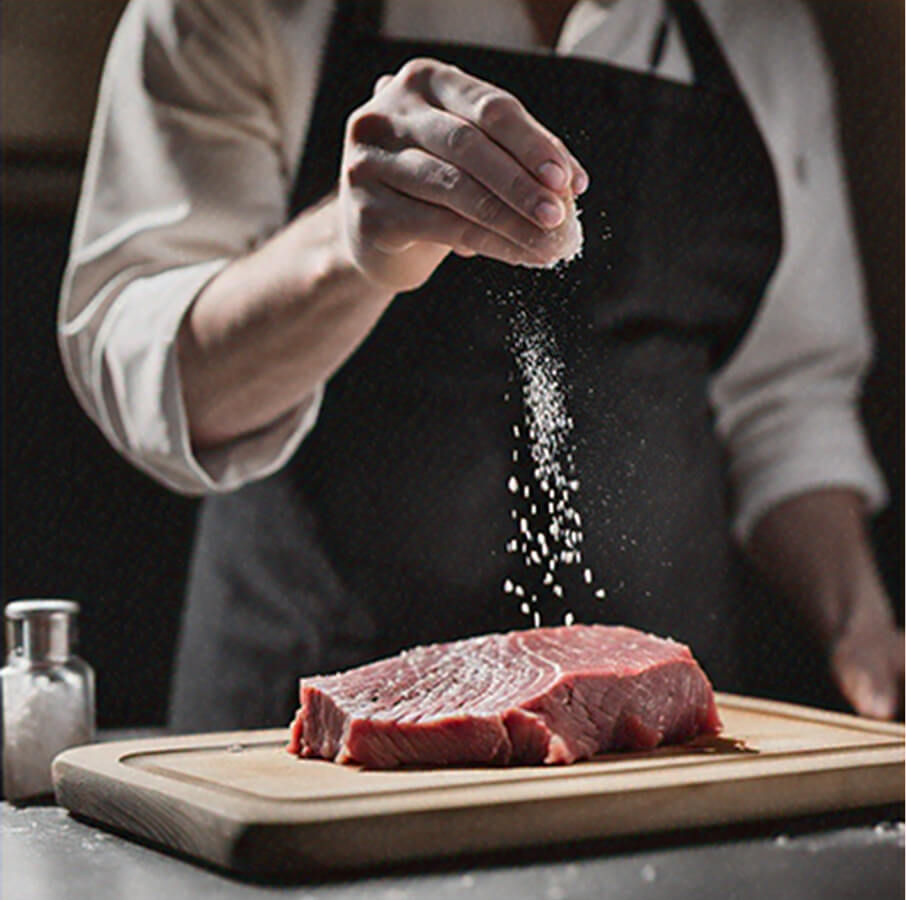
Sear beef fillets on high heat for 2 minutes per side to form a golden crust. Let it cool before proceeding to keep the beef tender.
1
Searing the Beef
Sear beef fillets on high heat for 2 minutes per side to form a golden crust. Let it cool before proceeding to keep the beef tender.
1
Searing the Beef
Sear beef fillets on high heat for 2 minutes per side to form a golden crust. Let it cool before proceeding to keep the beef tender.
1
Searing the Beef
Sear beef fillets on high heat for 2 minutes per side to form a golden crust. Let it cool before proceeding to keep the beef tender.
Notes


1
Season the good fresh beef fillets with salt and black pepper. Heat olive oil in a pan over high heat and sear the fillets for 2 minutes per side until it fully browned. Remove the beef from the pan and brush with a thin layer of mustard. Let it cool.
1
Season the good fresh beef fillets with salt and black pepper. Heat olive oil in a pan over high heat and sear the fillets for 2 minutes per side until it fully browned. Remove the beef from the pan and brush with a thin layer of mustard. Let it cool.
1
Season the good fresh beef fillets with salt and black pepper. Heat olive oil in a pan over high heat and sear the fillets for 2 minutes per side until it fully browned. Remove the beef from the pan and brush with a thin layer of mustard. Let it cool.
1
Season the good fresh beef fillets with salt and black pepper. Heat olive oil in a pan over high heat and sear the fillets for 2 minutes per side until it fully browned. Remove the beef from the pan and brush with a thin layer of mustard. Let it cool.
Instructions
Quality Fresh 2 beef fillets ( approximately 14 ounces each )
Quality Fresh 2 beef fillets ( approximately 14 ounces each )
Quality Fresh 2 beef fillets ( approximately 14 ounces each )
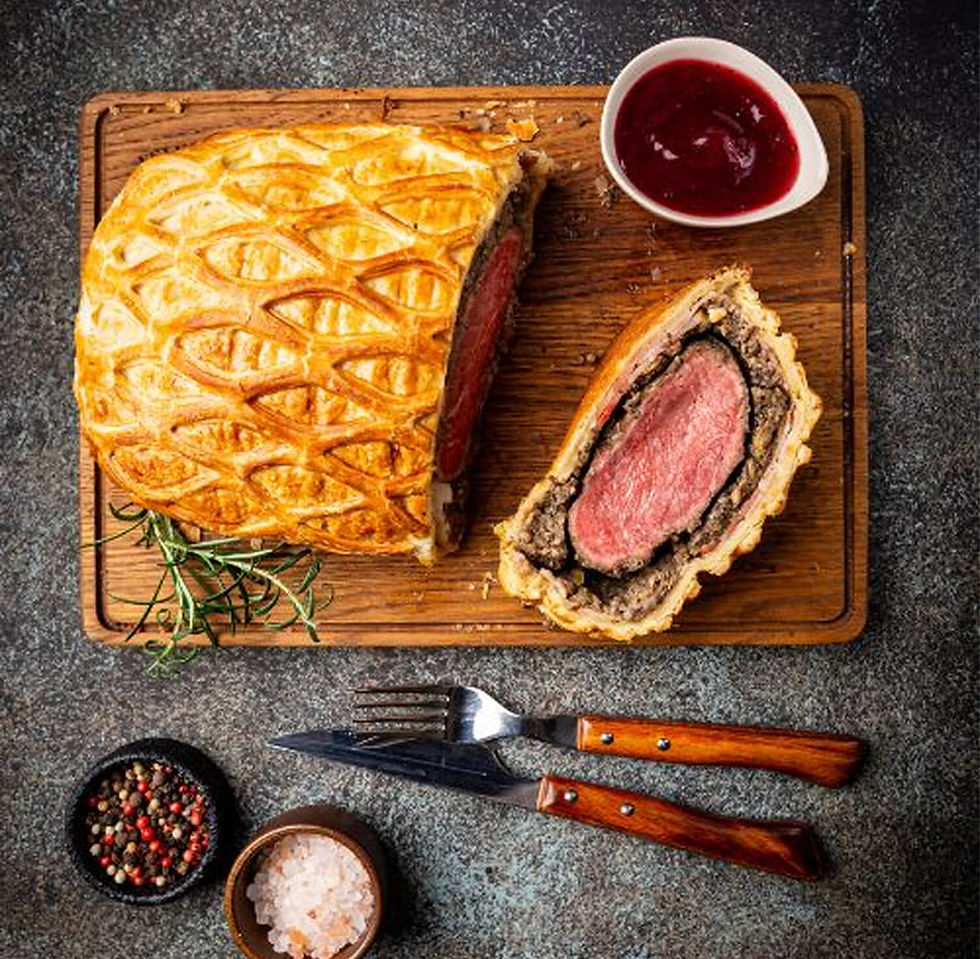
Beef Wellington
Beef Wellington
Fusion Wizard - Rooftop Eatery in Tokyo
Author Name

Beef Wellington is a luxurious dish featuring tender beef fillet coated with a flavorful mushroom duxelles and wrapped in a golden, flaky puff pastry. Perfect for special occasions, this recipe combines rich flavors and impressive presentation, making it the ultimate centerpiece for any celebration.
Servings :
4 Servings
Calories:
813 calories / Serve
Prep Time
30 mins
Prep Time
30 mins
Prep Time
30 mins
Prep Time
30 mins


Comments